Home
About Me
Contact/Location
Gift Certificates
Get a Massage
Types of Massage
What to Expect
Articles and Info
Stress
Stretching
Insurance
News and Updates
Testimonials
Office Policies
Free Newsletter
Types of Massage Triggerpoint
Deep Tissue
Sports Massage
Diseases and Conditions Back/Neck Pain
Carpal Tunnel
Tension/Pain
Headaches
Knee Pain
Heel Pain
Fibromyalgia
For Massage Therapists CE Calendar
Support Groups
Supervision
 Resources
For LMP's

Enter your E-mail Address

Enter your First Name (optional)

Then

Don't worry -- your e-mail address is totally secure.
I promise to use it only to send you Massage Seattle.

Subscribe To This Site
XML RSS
Add to Google
Add to My Yahoo!
Add to My MSN
Subscribe with Bloglines

Massage for Back Pain

Getting regular massage for back pain can help address the many causes of back pain.

Nearly 80 percent of adults are affected by back pain at some time in their lives. The most common place where pain occurs is in the low back and the neck. Back pain can be acute (the initial sudden and/or severe pain) or chronic meaning it doesn't go away for awhile.

There are many causes of back pain -too many to list them all here and go into detail so this is just a small list of the possible causes for back pain:

  • Muscle tightness
  • Muscle strain
  • Mechanical problems such as poor posture, weak muscles, scoliosis
  • Joint degeneration (arthritis)
  • Vertebral disc degeneration
  • Herniated discs
  • Injuries such as car accidents, sports injuries, falls
  • Poor diet - eating foods that you are allergic to or intolerant of or eating too much acid foods like sugar, caffeine and grains
  • Psychological stress - including repressed emotions, current life stress

How Your Back Works

There are many different structures and systems that are critical for the functioning of the spine.

The nervous system controls and regulates all of the other systems in your body. It is your electrical system. The root of it is of course your brain that is connected to the central trunk which is your spinal cord that runs through the core of your spinal vertebrae. The spinal cord branches out into the rest of your body and is the central intelligence agency that connects communication with your brain.

The spinal column has 30 vertebrae that are stacked on top of each other to form the spinal column. The spinal column protects the spinal cord and also helps build the support system of the body. The muscles attach to the spinal cord to produce more support and movement. The main purpose of the spine is to support the head and keep the head level for proper functioning of the eyes and ears which are crucial in obtaining sensory information for your body.

Between each of the vertebrae are shock absorbers called discs which are circular, flattened cushion-like structures that are filled with fluid. It helps to absorb shocks to the spinal column. The vertebrae are connected by spinal ligaments that come in a variety of widths and strengths. The spinal muscles which there are literally thousands of work to support the spine and run the length of your back and neck.

In a normal, healthy spine, the five lumbar vertebrae form a forward (lordotic) curve, so that when you lie supine with your legs straight you can easily slide your hand under your low back. A low back without this natural, shock-absorbing curve is out of balance and has less stability. A reverse curve, in which the vertebrae are straight or curved posteriorly, can make a person more prone to back pain.

The ligaments hold the vertebrae in place. Ligaments that are too loose can be a cause of back pain. Ligaments can become overstretched due to over use, poor posture, injury, truama or genetics. When the ligaments are damaged or weak the muscles are put under more stress to support the spine.

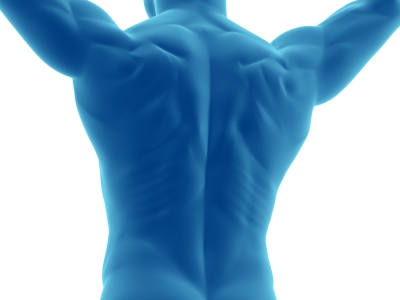
Keeping your back muscles strong, flexible and pain free is the key to preventing back pain as well as relieving back pain. The muscles of the body are paired together to help create and synchronize movement. When the muscles of the back are tight it makes the front abdominal muscles have to work harder to support the body. If the muscles of the abdomen are too tight from things like too many sit ups or emotional stress, the back muscles have to work harder to hold the body up.

Muscles tighten up in reaction to physical, mental, emotional and spiritual stress. (Stress is really anything that is too much for the body or not right for the body.) They also tighten up to changes in the internal organs such as the liver and pancreas meaning that your overall health is reflected in your muscles. Muscles can get so tight that they cause pain in one area of the body or they can even become numb to touch or sensations.

Call 206-623-1391 or email me with any questions on how massage can help your back pain or to make an appointment. The delicate balance of the muscles of the body is needed for support, flexibility and muscle tone and your over all health.When your spine and supporting muscles are unhealthy it can also affect your other systems such as the nerves which can become compressed from tight muscles. The nerves branch out to other organ and internal systems and they can become compromised in their functioning just from having tight muscles.

There are other muscles of the body that influence the spine one being the abdominal muscles that I already mentioned and the hamstrings. The abdominal muscles include not only the superficial muscles that create the 'ripped ab' look (which by the way is really unhealthy because it is compressing the spine more than supporting it) and the deeper muscles of the abdomen called the psoas. The psoas is a pair of muscles that is deep in the abdomen that support the spine. To me that is what the core muscles are. They attach to the spine on the lateral spinal processes of the vertebrae and when they are working properly they help hold the spine up and hold the space between the vertebrae for the discs. When there is too much pressure from the Psoas (it is too tight or weak) the discs can become compressed and even start to bulge or herniate.

The Hamstrings are the muscles on the back of the legs that connect from the pelvis to below the knee. When hamstrings are tight they pull on the pelvis and cause the lumbar spinal area to flatten. Normally there is a slight curve to that area of the spine which is the reason the whole spine can stay supported.

How your mind influences the health of you Back

Everything that happens to your health is partially a result of thinking. So many people work and have such stressful lives and get caught up in emotions that their thinking becomes clouded. When you are stressed thinking actually turns off as the body prepares for the 'assault'.

Our bodies also store ALL of our old emotions unless they are dealt with in therapy or in getting regular massage therapy. This is a totally unconscious process that results in physical distress. We also hold on to physical patterns that develop early in childhood. Body armoring is a tension pattern that has psychological roots. You can usually tell when there is an underlying psychological issue because the body usually does not respond to the first 2-3 massages. Armoring is a defense mechanism that was developed to survive whatever was happening. Childhood abuse and severe physical trauma and/or disease may be involved. I often see many emotional releases happen when working with people with body armoring.

Massage is a powerful vehicle for helping the conscious and the unconscious mind communicate. Touch allows the feeling part of the body to come more alive and as you become more aware of how you feel, you can then come to make more effective decisions for yourself and life based on your true self rather than on the emotions that were caught up inside.

So dealing with back pain is a complex and far reaching aspect of creating health and wellness. Getting regular massage can help prevent back pain as well as help relieve back pain.

For more information:Massage and Back Pain research studies


footer for massage for back pain page